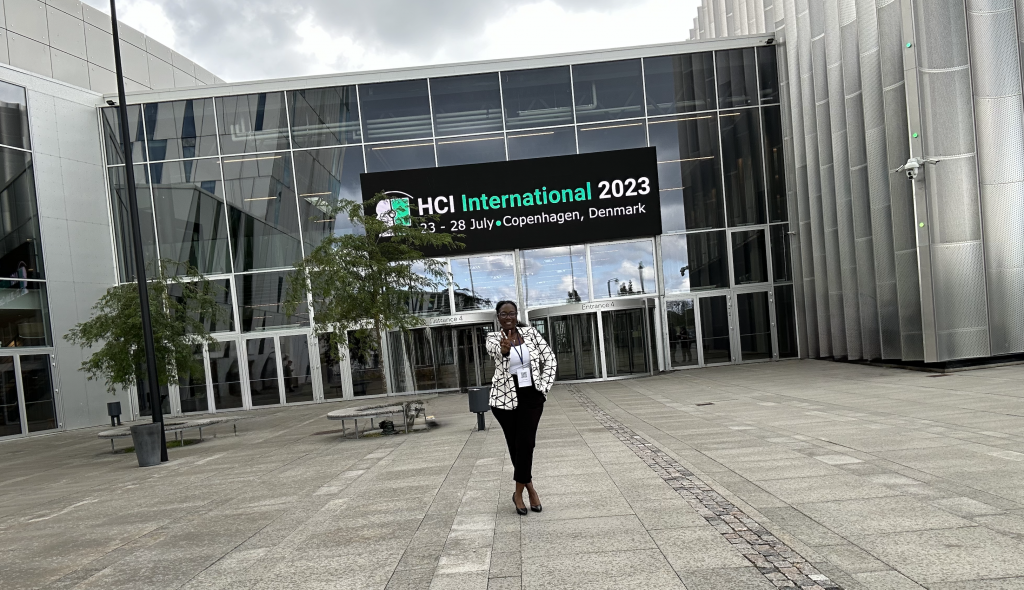
Dr. Brit traveled to Copenhagen, Denmark to present her research titled “The Impact of Accessing Mechanisms for Group Collaboration for Students in Higher Education.” Her presentation addressed one of the most urgent and evolving challenges facing colleges and universities around the world: how technology has redefined group collaboration during and after the COVID‑19 pandemic.
Speaking to an international audience of educators, researchers, innovators, and industry leaders, Dr. Brit explored how communication technologies—once optional—have become foundational to the success, equity, and engagement of students navigating collaborative work in the modern era.
A Global Conversation Rooted in a Global Crisis
The COVID‑19 pandemic dramatically changed the higher education landscape. With campuses closing, classrooms shifting online, and social distancing policies impacting every aspect of learning, group work had to be reimagined almost overnight.
Dr. Brit’s research underscores a key reality:
group collaboration has always been essential in higher education, but the mechanisms used to support it have never been more important than they are today.
She highlights that nearly every undergraduate student will encounter at least one required group project before graduation—regardless of major. Such projects teach critical workplace skills including teamwork, conflict resolution, communication, and project management. In STEM and technology‑focused disciplines, the use of computer‑mediated communication (CMC) tools is even more central, functioning as the primary channel for both instruction and peer collaboration.
How Technology Rewrote the Collaborative Experience
During her presentation, Dr. Brit broke down how the pandemic accelerated reliance on tools like:
- Learning management systems
- Collaborative document platforms
- Video conferencing tools
- Messaging and project management applications
- Cloud-based development and editing environments
These tools shifted from being convenient enhancements to becoming the backbone of group work.
Her research evaluates how effectively students used these platforms during the pandemic, particularly in environments where face‑to‑face collaboration was not possible. She emphasized that technology didn’t just supplement communication—it became communication.
A Deep Dive Into Student Adaptation and Human Factors
One of the most compelling aspects of Dr. Brit’s research is her focus on human behavior. She analyzed:
- How students adapted to remote collaboration
- The creativity they applied to stay connected
- The barriers and frustrations they encountered
- The emotional and cognitive load of digital communication
- The varying levels of digital literacy across student groups
She acknowledged that while technology can enhance collaboration, it can also expose disparities—especially for students who lack access to reliable internet, functional devices, or prior experience with digital tools.
Her study allowed the audience to see beyond the platforms themselves and into the lived experiences of the students using them.
CMC Tools as Bridges—Not Barriers
Dr. Brit’s findings show that when used thoughtfully, CMC tools can dramatically improve collaboration outcomes. Students who embraced these tools with intention, creativity, and adaptability often performed better and experienced stronger peer connections than before the pandemic.
Her presentation highlighted the importance of:
- Designing collaborative assignments with digital tools in mind
- Training students in effective online communication
- Acknowledging the psychological impact of remote collaboration
- Creating equitable tech access policies
- Supporting students through the transition
- Offering flexibility for different communication styles
Ultimately, her research advocates for a more human-centered approach to digital collaboration—one that sees technology not as a replacement for human connection, but as a mechanism to strengthen it.
Implications for the Future of Higher Education
Dr. Brit concluded her presentation with a clear message:
Group collaboration is not going away—and the tools that support it must evolve in ways that promote student success, equity, and accessibility.
She highlighted several key implications for higher education institutions:
- Collaborative projects must be redesigned with hybrid and digital environments in mind.
- Faculty need ongoing training in best practices for digital group work.
- Institutions should invest in robust technology access for all students.
- Policies must reflect the realities of modern communication—both synchronous and asynchronous.
- Students must be equipped early with collaborative technology skills that mirror the 21st‑century workforce.
Her powerful analysis resonated with the international audience, many of whom shared similar experiences across their own institutions during the pandemic.
A Global Voice for Student Success
Dr. Brit’s contribution to this global conversation in Copenhagen was not just informative—it was deeply timely. As higher education continues to navigate a post‑pandemic world, voices like hers are shaping how institutions reimagine learning, connection, and collaboration for the future.
Her work continues to uplift the importance of access, intentionality, and the human element behind every technological tool.
And with her research now reaching international platforms, Dr. Brit remains a committed advocate for equity, excellence, and innovation in higher education.